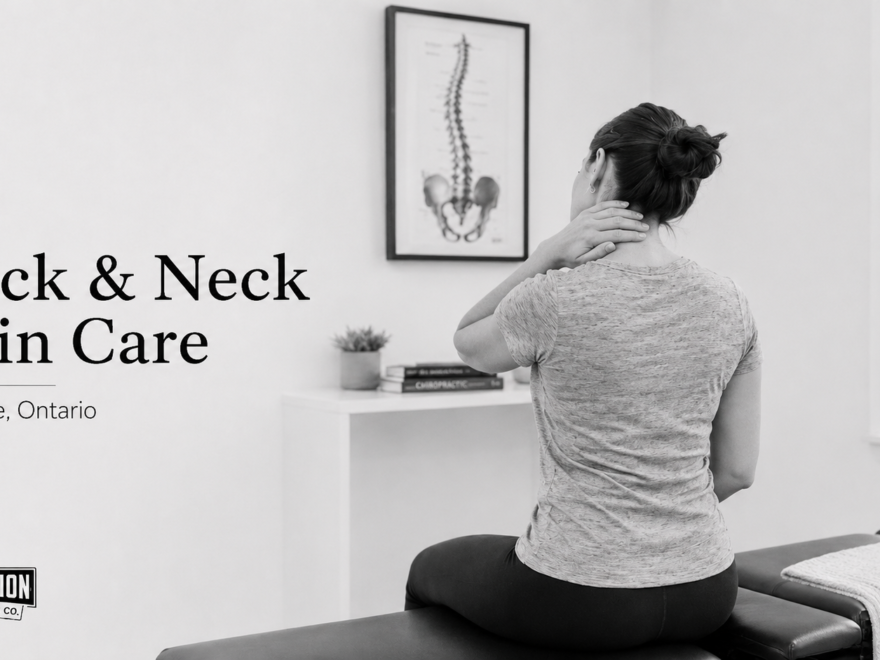
What Oakville Patients Should Know About Back And Neck Pain Care
Back and neck pain are common concerns for adults and families in Oakville, Ontario. The right care approach usually looks beyond the sore spot itself and considers posture, daily routines, movement habits, sleep, stress, and how long the symptoms have been present.
When back or neck pain starts affecting work, sleep, driving, exercise, or family life, it may be time to look at what is contributing to the problem rather than simply waiting for it to pass.
Some discomfort appears after a clear incident, such as lifting something awkwardly, sleeping in an uncomfortable position, or sitting too long during travel. Other pain builds gradually. Desk work, phone use, long commutes, repetitive tasks, poor sleep positions, and reduced movement can all contribute to stiffness and irritation over time.
For people in Oakville dealing with ongoing back or neck discomfort, chiropractic care is one option that may help assess movement, identify strain patterns, and support a practical plan for better function. For broader background, MedlinePlus provides a helpful overview of back pain causes and treatment options.
Why Back And Neck Pain Can Become Persistent
Daily Strain Can Add Up Over Time
Back and neck pain does not always come from one dramatic injury. In many cases, symptoms develop because the body is repeatedly placed under the same type of stress.
Long periods of sitting, working at a poorly positioned screen, looking down at a phone, driving for extended stretches, or sleeping with poor neck support can all create repeated load on the spine and surrounding muscles.
At first, these habits may only cause mild stiffness. Over time, the discomfort may become more noticeable, especially when the same positions are repeated day after day.
Posture Is Only Part Of The Picture
Posture matters, but it is not the whole story. A person can have decent posture and still experience pain if they do not move enough, carry too much tension, or repeat the same movements without enough recovery.
Back and neck discomfort often involves a mix of joint stiffness, muscle tension, reduced mobility, and lifestyle factors. That is why a useful assessment usually looks at more than how someone sits or stands.
A practical care plan may consider work setup, activity level, sleep habits, stress, past injuries, and how the symptoms change throughout the day. The Canadian Centre for Occupational Health and Safety offers useful information on office ergonomics and workstation setup, which can be relevant for people whose symptoms are connected to desk work.
Neck And Back Symptoms Can Be Connected
The spine works as a connected system. Neck stiffness may be linked with upper back tension, headaches, shoulder discomfort, or posture strain. Lower back pain may be affected by hip mobility, core control, prolonged sitting, or the way a person bends and lifts.
This does not mean every ache has the same cause. It does mean that treating the body as separate parts can miss important patterns.
For many patients, the goal is not only to reduce discomfort, but also to understand what is keeping the discomfort coming back.
What A First Chiropractic Visit Usually Involves
A Health History And Symptom Review
A first visit usually starts with a conversation about symptoms, health history, daily routines, and goals for care. This helps the chiropractor understand when the pain began, where it is felt, what makes it worse, and what seems to help.
This part of the visit is important because two people can describe similar pain but need different recommendations. A new episode of stiffness after sleeping awkwardly is different from months of recurring pain that affects work, driving, or exercise.
A clear symptom review also helps identify when additional medical evaluation may be appropriate. For example, Choosing Wisely Canada explains that imaging tests for lower back pain are usually reserved for cases with specific red flags, such as severe or worsening nerve symptoms, fever, recent infection, unexplained weight loss, or loss of bowel or bladder control.
A Movement And Posture Assessment
A movement and posture assessment can help show how the body is functioning in everyday positions. This may include checking range of motion, spinal movement, areas of stiffness, and how certain movements affect symptoms.
For people with desk-related strain, driving discomfort, or reduced mobility, this can make the problem feel more concrete. Instead of only saying “my neck hurts” or “my lower back feels tight,” the patient may begin to understand which movements, positions, or habits are involved.
That understanding can make the care plan more useful and easier to follow.
Care Recommendations And Next Steps
After an assessment, the next step is usually a recommendation based on the patient’s symptoms, comfort level, schedule, and goals.
For some people, that may involve chiropractic adjustments to support mobility and joint function. For others, it may include home guidance, ergonomic changes, stretching, activity pacing, or a combination of approaches.
A good plan should be clear. Patients should understand what is being recommended, why it is being recommended, and what they can do between visits to support progress.
What Patient-Centered Back And Neck Pain Care Should Feel Like
Clear Explanations Without Pressure
Patients dealing with pain are often already frustrated. They may have tried rest, stretching, medication, massage, or changing their routine without getting lasting relief.
That is why clear communication matters. A patient-centered approach should explain what may be contributing to the discomfort in plain language, without making the person feel rushed or pressured.
Patients should feel comfortable asking questions. They should also feel that recommendations are being made based on their actual situation, not based on a one-size-fits-all template.
Care That Fits Real Life
The best care plan is one a person can realistically follow. Work demands, family schedules, commute times, activity levels, and budget all matter.
Someone who sits at a desk all day may need different guidance than someone who works a physical job. A parent managing a busy household may need simple home strategies that do not require a long routine. A person who travels often may need advice for driving, hotel sleep setups, and movement breaks.
Care that fits real life is more likely to be followed consistently.
Support Between Visits
Back and neck pain care should not depend only on what happens during an appointment. What a person does between visits can make a major difference.
Simple changes can help reduce repeated strain. These may include adjusting a workstation, changing pillow support, taking short movement breaks, improving lifting habits, or pacing activity after a flare-up.
Small changes are often easier to maintain than complicated routines. They can also help patients feel more in control of their recovery. The National Institute of Neurological Disorders and Stroke notes that habits such as regular movement, avoiding repeated strain, and using ergonomic equipment can play a role in back health. More detail is available in its overview of pain and back-care prevention guidance.
Common Reasons People Seek Back And Neck Pain Care
Lower Back Pain
Lower back pain is one of the most common reasons people seek care. It may show up as stiffness, aching, sharp discomfort with movement, or pain that worsens after sitting or standing for long periods.
In some cases, lower back discomfort may be associated with sciatic-type symptoms, such as irritation that travels into the hip, glute, or leg. These symptoms should be assessed carefully so that the care plan matches the person’s presentation.
Neck Stiffness And Reduced Range Of Motion
Neck stiffness can make normal daily tasks harder. Turning the head while driving, looking down at a phone, working at a computer, or sleeping comfortably can all become more difficult.
Reduced range of motion may involve joint restriction, muscle tension, posture strain, or irritation from repeated positions. MedlinePlus has a useful general resource on neck injuries, neck pain, and related disorders.
Tension Headaches And Upper Back Strain
Neck and upper back tension can sometimes travel with tension-type headaches. People who spend long hours at a desk, use multiple screens, drive frequently, or carry stress in their shoulders may notice this pattern.
Care may involve looking at spinal mobility, muscle tension, posture habits, and daily triggers. The goal is to address the contributing pattern, not only the symptom.
Workstation, Driving, And Repetitive Stress
Modern routines can be hard on the spine. Many people spend hours sitting, leaning forward, looking down, or repeating the same physical tasks.
These patterns can gradually irritate the back, neck, shoulders, and surrounding muscles. Even small adjustments to screen height, chair position, driving posture, lifting technique, or movement breaks may reduce strain over time.
Where Chiropractic Care May Fit
Chiropractic care is one option people may consider when back or neck discomfort is affecting movement, comfort, or day-to-day function. Depending on the patient, care may include spinal manipulation, other hands-on techniques, movement guidance, posture support, and practical home advice.
The National Center for Complementary and Integrative Health provides a balanced overview of spinal manipulation and what patients should know, including where it may fit among non-drug approaches for low back pain.
As with any form of care, the right approach depends on the individual. Patients should be assessed properly, should understand the recommendations being made, and should feel comfortable discussing any concerns before treatment begins.
A Local Oakville Example
Foundation Chiropractic Co. is one Oakville chiropractic clinic that reflects this type of patient-centered approach to back and neck pain care. The clinic emphasizes clear explanations, individualized care planning, and practical support for patients dealing with spinal discomfort, posture strain, stiffness, and mobility concerns.
Rather than treating back and neck pain as isolated complaints, the clinic’s approach considers how symptoms fit into a person’s daily life. That can include work routines, family demands, sleep habits, activity levels, and the small movement patterns that may be contributing to ongoing irritation.
For Oakville residents who are comparing care options, this kind of approach can be helpful because it focuses on understanding the cause of discomfort, explaining recommendations clearly, and giving patients practical steps they can use outside the clinic.
Choosing Back And Neck Pain Care In Oakville
When choosing a chiropractor or other health professional for back and neck pain, patients should look for more than convenience. A good experience should include careful listening, clear explanations, a thoughtful assessment, and recommendations that match the person’s goals and comfort level.
It is also helpful to choose a provider who discusses what can be done between visits. Ergonomics, sleep position, movement breaks, activity pacing, and simple daily habits can all play a role in reducing repeated strain.
Back and neck pain can be frustrating, especially when it affects work, sleep, driving, or normal movement. A practical, patient-centered approach can help people better understand their symptoms and take more confident next steps toward improved function.