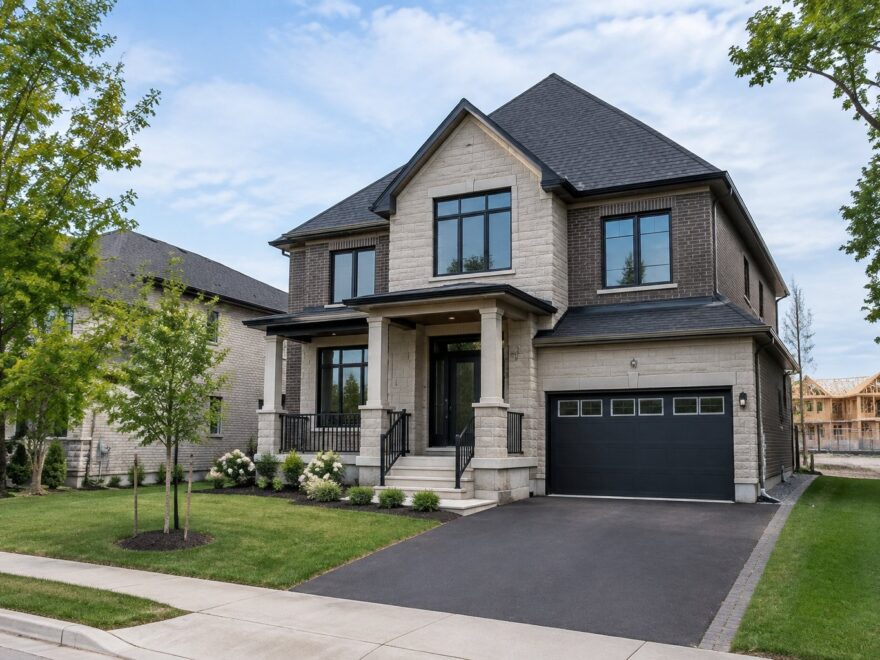
Most new homes in Richmond Hill today are condos and townhomes, not new detached houses on fresh land. Growth is focused along Yonge Street, and older neighbourhoods see one-off rebuilds. The Oak Ridges Moraine limits how far the city can spread north. If you want New Home Construction in Richmond Hill, ON, expect to choose between a pre-construction or newly built condo near Yonge Street, a townhome in a low-rise project, or a custom infill house on an existing lot. Each comes with its own costs, contract terms, and warranty rules.
The timing is unusual. GTA new-home sales fell to their lowest level in 45 years, according to the Financial Post, while prices stayed high and unsold inventory grew. That can give you more room to negotiate. It also means you should check a builder’s health and contract terms closely before you sign.
You will be able to match a home type to a realistic location. You will also learn to spot the extra costs that never appear in the advertised price and read a builder’s agreement with clear eyes.
What Types of New Homes Can You Buy?
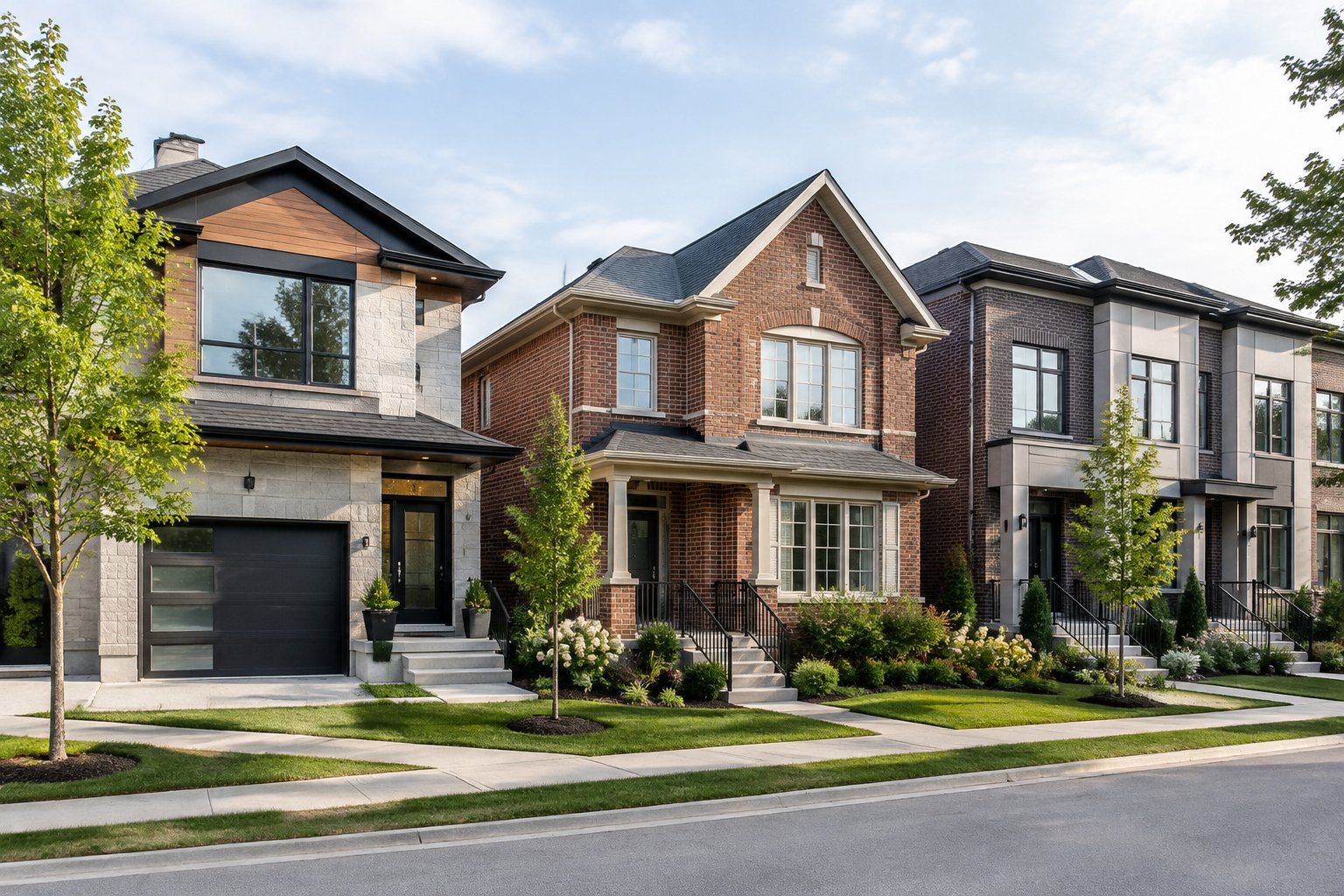
You can buy three main kinds of new homes in Richmond Hill: condos in mid-rise and high-rise towers, townhomes in low-rise projects, and detached houses, most of which are custom rebuilds on existing lots. Each type follows different legal rules for cooling-off rights, deposit protection, and warranty claims.
Pre-Construction and Newly Built Condos
Condos make up the largest share of new supply in Richmond Hill. Most are clustered along the Yonge Street corridor, where the city plans for taller buildings near transit.
You can buy a condo at two stages:
- Pre-construction: You sign before the building is finished, sometimes before it starts. You pay deposits over time and wait, often several years.
- Newly built or completed: The unit is done or close to done. You can see what you are buying and move in sooner.
Condo buyers get a key legal protection. Under section 73 of Ontario’s Condominium Act, you have a 10-day cooling-off period to cancel for any reason and get your full deposit back. The clock starts on the later of two dates: the day you receive the signed agreement, or the day you receive the disclosure statement and the Condo Guide.
Calendar days count, weekends included. Line up your lawyer and mortgage review before you sign so the review happens inside that window.
New Townhomes and Low-Rise Communities
Townhomes sit between condos and detached houses on price and space. You will find freehold towns, where you own the land and building, and condo towns, where you share common areas and pay monthly fees.
The ownership type changes your rights. A freehold town has no statutory cooling-off period right now. A condo town does.
When you compare low-rise projects, ask about:
- Whether the lot is freehold or part of a condo corporation
- Monthly fees for snow removal, landscaping, or private roads
- Parking: garage, driveway, or both
- How close the project is to busy roads or future construction
Low-rise projects in Richmond Hill tend to be smaller and scattered across the city. Large new subdivisions are rare.
Detached Homes and Custom Infill Builds
New detached homes in Richmond Hill usually take the form of a custom house built on an existing lot after an older home is torn down. You either buy a finished infill home from a small builder, or you buy land and hire a builder yourself.
That second path is called a contract home in Ontario. You own the land and pay a builder to build on it. Contract homes carry most of the same warranty protections, but some rules differ. For example, you get financial loss coverage in place of delayed closing coverage.
If you hire your own builder, you also deal with city permits. Richmond Hill accepts online building permit applications for custom homes, and each submission covers one single-family house. Plans must reference a current survey from a registered Ontario Land Surveyor.
Where Is New Construction Happening?
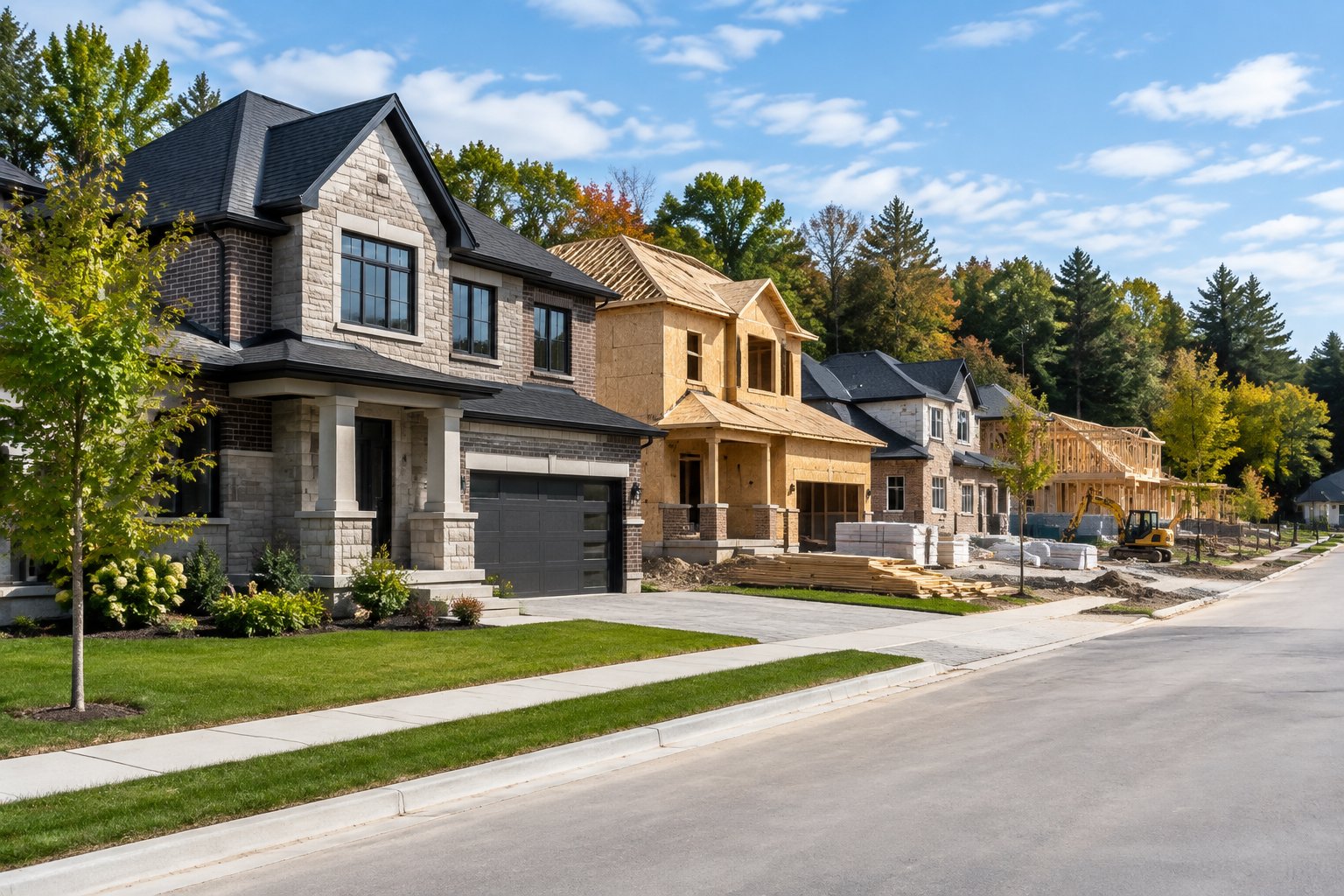
New construction in Richmond Hill follows the city’s planning map: towers along Yonge Street, one-off rebuilds inside older neighbourhoods, and tight limits in the north near the Oak Ridges Moraine. Where you want to live largely decides what type of home you can find there.
Yonge Street and Richmond Hill Centre
The Yonge Street corridor and the Richmond Hill Centre area are where most new homes are being built. The city has marked these as places for growth, so mid-rise and high-rise condos dominate.
The draw is transit. Projects here are planned around the future Yonge North Subway Extension. Keep in mind that a future subway is a plan with its own timeline, and your purchase should make sense even if service starts later than expected.
Buying on Yonge means:
- Mostly condos, with few freehold options
- Construction near your building for years as nearby sites develop
- Walkable access to shops and buses
Before you commit, walk the area on a weekday. Note traffic, noise, and empty lots that will become future towers. Consider a side story about the best builders in the Niagara Region if you aren’t keen on staying in the big city.
Infill Opportunities in Established Neighbourhoods
Older neighbourhoods such as Bayview Hill and Westbrook see new detached homes built one lot at a time. A builder or owner tears down an older house and puts up a larger new one.
These builds follow Richmond Hill’s zoning rules on height and setbacks, and some go through site plan control. That limits how big a new house can be. If you plan to buy a lot and build, get a zoning review first. The city handles zoning questions through formal Zoning and Compliance Letter Requests, not by phone.
Infill gives you established trees, mature streets, and nearby schools. The trade-off is price, since you pay for land in a settled area plus a new house.
Building Constraints Near the Oak Ridges Moraine
The Oak Ridges Moraine runs through northern Richmond Hill, and provincial rules protect it. This is the main reason you see few new large subdivisions in the north.
In areas like Oak Ridges, new homes must comply with the Oak Ridges Moraine Conservation Plan. That plan limits how much of a lot can be covered by hard surfaces like roofs and driveways, to protect groundwater.
If you are looking at a lot in the north:
- Ask your builder or planner how moraine rules affect house size
- Check whether the property needs extra approvals
- Budget extra time for review
Expect fewer choices up north, with any new supply coming from small infill projects.
How Much Does a New Home Really Cost?

A new home costs more than its advertised price once you add HST, development charges, closing adjustments, and, for condos, fees and interim occupancy payments. Your final number depends on the exact terms in your agreement, so read them line by line.
Comparing Prices, Floor Plans, and Included Features
Compare homes by what you get for the price. Advertised prices change often, and two homes at the same price can differ a lot in finishes and space.
For context on the wider market, RE/MAX reports the average York Region sale price fell 1.5 per cent to $1,051,600 between 2025 and 2026. The same report describes the region as generally favouring buyers.
When you compare projects, build a simple sheet:
| What to compare | Why it counts |
|---|---|
| Interior square footage | Some plans count balconies or unusable space |
| Ceiling height | Changes how large a room feels |
| Standard finishes | Upgrades add up quickly |
| Parking and locker | Sometimes sold separately |
| Expected closing date | Affects your rent and mortgage plans |
Ask for the finish list in writing. If the contract lets you choose a finish, the builder cannot change it without your written consent.
Deposits, HST, Development Charges, and Closing Costs
Deposits for pre-construction homes are paid in stages, and the schedule is set by each builder. Get the full schedule before you sign and confirm you can meet every payment.
HST: New homes carry HST, while resale homes are generally exempt. Some advertised prices include HST with the rebate assigned to the builder, and others do not. Eligibility for rebates depends on whether you will live in the home. Ask in writing how HST is handled in your price.
Development charges: These are fees cities charge to pay for roads, pipes, and other services. In Richmond Hill, permit-related fees include development charges plus levies and deposits. Builders sometimes pass increases on to you at closing. Look for a cap on development charges in your agreement.
Governments are working to lower these charges. Ottawa and Ontario plan to invest $8.8-billion over the next decade to help cut municipal development charges, the Globe and Mail reports. Changes only help you if your contract passes them through.
Closing costs: Expect legal fees, land transfer tax, and builder adjustments such as utility hookups, meter fees, and Tarion enrolment.
Condo Fees and Interim Occupancy Costs
Condo buyers face two costs that freehold buyers do not: monthly condo fees and interim occupancy fees.
Interim occupancy is the stretch when you can move into a finished unit before the building is registered and you take legal ownership. During this time you pay the builder a monthly fee. It covers interest on the unpaid balance, estimated property taxes, and estimated condo fees. None of it pays down your price.
This period can last months. Ask your builder:
- How long interim occupancy is expected to last
- How the monthly fee is calculated
- What the first-year condo fee budget is
Courts expect both sides to follow the contract. One Toronto Star column explains a ruling where builders can’t pad closing costs with unproven extras, and buyers don’t get free occupancy either.
How Do You Evaluate a Builder and Purchase Agreement?

Check the builder’s licence, read the agreement with a lawyer, and know what Tarion covers before you pay a deposit. A builder’s agreement is written by the builder’s lawyers to protect the builder, so it reads very differently from a resale offer.
Checking Builder Credentials and Project Status
Start with the licence. Selling a new home without a licence from the Home Construction Regulatory Authority (HCRA) is illegal in Ontario.
The HCRA advises you to check the Ontario Builder Directory before signing or paying a deposit. The directory shows licence status, years in business, homes built, and any conduct concerns or charges. If a builder is missing from it, walk away.
Then check the project itself:
- Has the builder bought the land and secured approvals?
- Has construction started?
- Has the builder completed similar projects on time?
- What do past buyers say about delays and finish quality?
Project status matters because builders have cancelled deals before. CBC News reported on Ontario buyers whose builders asked them to pay more or lose the deal.
Reviewing Deposit Terms, Closing Dates, and Adjustments
Have a real estate lawyer review your agreement before you sign, or inside the 10-day window if you buy a condo. Once that window closes, the terms are usually fixed.
Your agreement includes a Tarion Addendum. Its first page, the Statement of Critical Dates, lists the expected finish date, the latest date the builder can extend to, and the date after which you can walk away.
Ask your lawyer to focus on:
- The deposit schedule and where deposits are held
- Early termination clauses that let the builder cancel
- The builder’s right to extend closing
- Adjustments and levies added at closing
- Caps on development charges
- Assignment rights
Assignment terms can surprise you. A Richmond Hill law firm notes that builder consent, fees, and timing all affect whether you can transfer your agreement before closing.
Understanding Tarion Coverage and Its Limits
Tarion is Ontario’s mandatory new-home warranty, and it runs on three timelines from your move-in date:
| Coverage | What it covers |
|---|---|
| 1 year | Defects in work and materials, Building Code compliance, unauthorized substitutions |
| 2 years | Water leaks, building envelope, electrical, plumbing, heating |
| 7 years | Major structural defects |
There are limits. For agreements signed on or after July 1, 2023, maximum coverage is $400,000 for a freehold home and $300,000 for a condo unit.
Deposit protection differs by home type:
- Condo: Held in trust, with a Tarion backstop up to $20,000
- Freehold up to $600,000: Up to $60,000
- Freehold over $600,000: 10 per cent of the price, to a maximum of $100,000
You must file claims on time using the right forms. Keep a list of defects from your first walkthrough and submit your 30-Day Form within the first 30 days.
Choosing the Right Richmond Hill New Build

Pick your home type and area first, then test every project against cost and contract. Here is a simple order to follow:
- Match type to location. Condos cluster along Yonge Street. Detached new homes mostly come from infill in older areas. Northern lots face moraine limits.
- Price the full cost. Add HST, development charges, closing adjustments, and condo or interim occupancy fees to the advertised price.
- Verify the builder. Search the Ontario Builder Directory before any deposit.
- Get legal review. Have a lawyer read the agreement and Statement of Critical Dates. For condos, use your 10-day cooling-off period.
- Know your warranty. Note your Tarion deadlines and coverage limits.
Freehold buyers should be extra careful, since no statutory cooling-off period applies to them yet. Book your lawyer before you sit down with the sales office.
Frequently Asked Questions
Are there move-in-ready new homes in Richmond Hill?
Yes, some builders sell completed or nearly completed homes and condo units. Supply changes week to week, so ask builders directly about finished inventory. Completed homes let you inspect what you buy and skip long waits.
How much is the deposit on a pre-construction home?
Each builder sets its own deposit amount and payment schedule. Get the full schedule in writing before you sign. Also confirm how Tarion protects your deposit, since limits differ for condos and freehold homes.
Is HST included in the advertised price of a new home?
Sometimes, but not always. Many builders include HST and take the rebate themselves, which only works if you qualify. Ask in writing how HST and any rebates are handled in your price.
What happens if my new home’s closing date is delayed?
Your rights come from the Statement of Critical Dates in your Tarion Addendum. Tarion offers compensation for delayed closing or occupancy if the builder misses set dates without proper notice. Past the final outside date, you may be able to cancel.
Does Tarion cover a custom-built home?
A custom home on land you own is a contract home, and it carries most Tarion protections. Some rules differ, such as financial loss coverage in place of delayed closing coverage. Confirm with your builder that the home will be enrolled with Tarion before work starts.